Cambridge Dictionary Names 'Human' as 2026 Word of the Year Reflecting AI Concerns
The Cambridge Dictionary chose "human" as its 2026 word of the year, highlighting societal debates about artificial intelligence and the evolving meaning of human identity amid AI's rise.
AI News and Cultural Impact
Part 1 of 1
Table of Contents
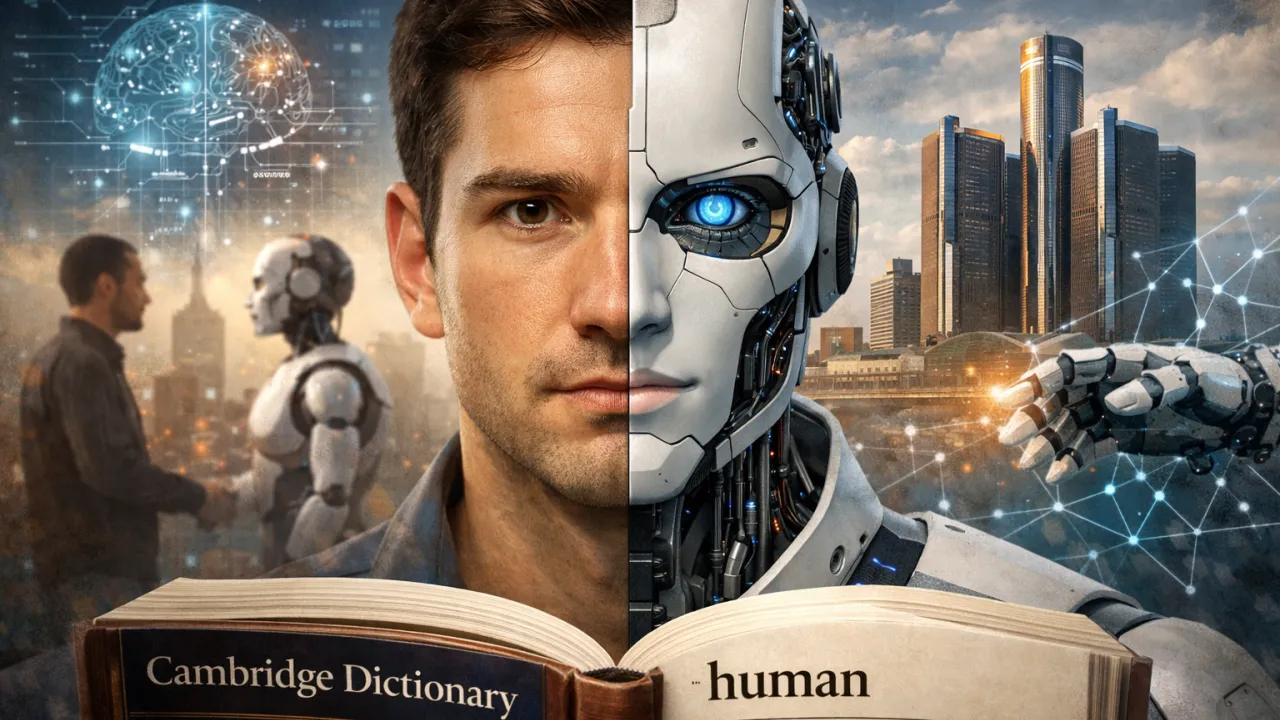
The Cambridge Dictionary has chosen “human” as its word of the year for 2026, signaling cultural reflections on artificial intelligence’s impact on perceptions of humanity. The choice, tracing back to the 15th century Latin-derived term, emphasizes qualities, faults, and feelings unique to people, contrasting with gods, animals, or machines.
Lexicographer Colin McIntosh noted that AI is reshaping discussions about what it means to be human, especially as cognitive tasks increasingly involve AI systems. This selection follows recent years where AI-related terms, such as “hallucinate” and “AI” itself, have been recognized by various dictionaries.
Bill Gates, Microsoft’s co-founder, commented that AI challenges us to reconsider humanity and that its success should be measured by how much it improves human lives. Other contenders for the 2026 word of the year included “agent,” referring to autonomous AI systems, and “analogue,” describing experiences not involving digital technology.
This choice underscores ongoing societal dialogue about AI’s role and the essence of human identity in an increasingly automated world.