North Korean Hackers Use AI Deepfakes to Impersonate CEOs in Video Call Scams
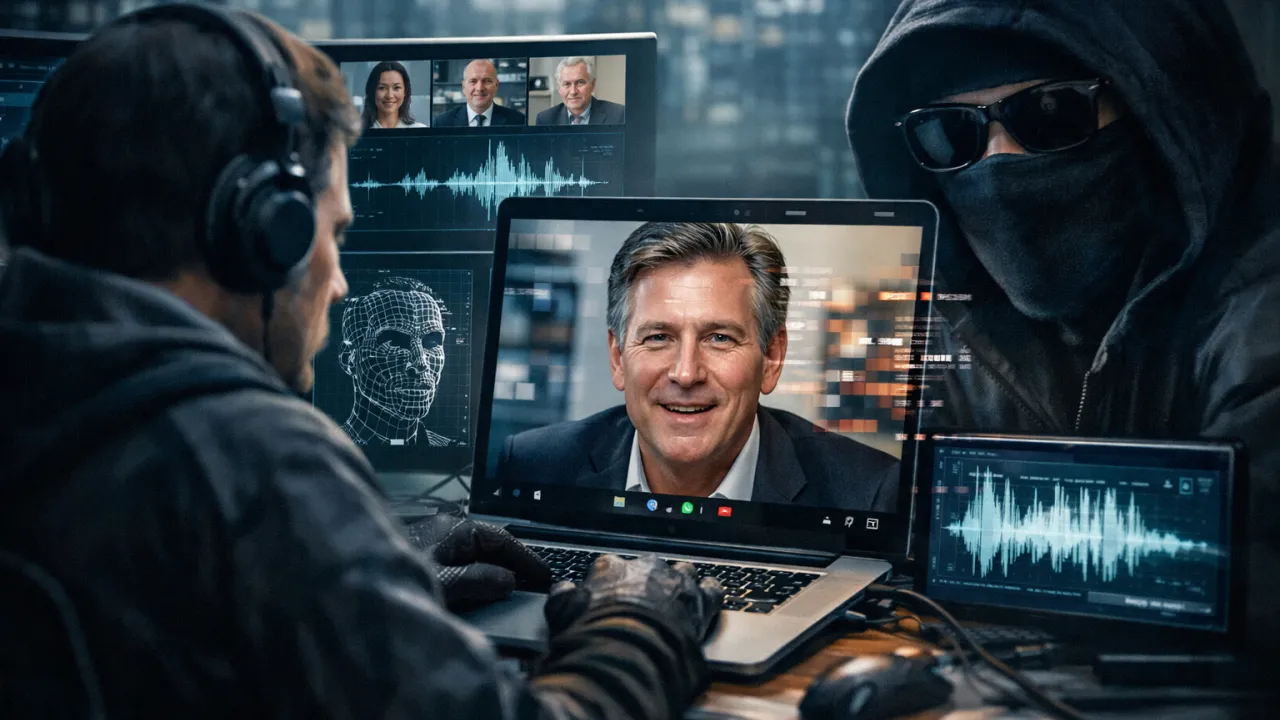
North Korean cybercriminals have employed commercial AI tools to create deepfake videos impersonating CEOs in fraudulent Zoom and Microsoft Teams calls, targeting executives worldwide in sophisticated financial scams, according to Escudo Digital.
AI News Highlights
Part 1 of 6
Table of Contents
North Korean hackers linked to the BlueNoroff group have escalated cyber fraud by using advanced artificial intelligence tools to clone the faces and voices of company founders and CEOs. Utilizing publicly available video content from sources like YouTube interviews and conference talks, they generate convincing deepfake videos for use in fake Zoom and Microsoft Teams calls.
An investigation by the American cybersecurity firm Arctic Wolf revealed that this campaign has targeted 677 executives and founders across 58 countries, with 84% of victims being high-ranking business leaders. The attackers employ a suite of commercial generative AI tools, including GPT-4o, Grok Imagine, Google Generative AI, and Wondershare AIGC, to produce digital replicas that are indistinguishable from real webcam images upon casual inspection.
The operation involves a feedback loop where each new victim is recorded during staged technical failures, and these live images are then reused alongside AI-generated deepfakes to deceive other contacts within the victims’ professional networks. Beyond video calls, the group has expanded their tactics by creating numerous malicious domains that mimic financial documents, security audits, and software updates to facilitate malware delivery.
Despite the sophistication of AI-assisted production, Arctic Wolf emphasizes that the success of these attacks still depends on executives executing malicious code manually. The group’s use of AI acts as a production multiplier, enabling scale and diversification but not fundamentally changing the intrusion method. Vigilance and verification through alternative channels remain critical to preventing such fraud.
This analysis is based on the original reporting by Escudo Digital.