University of Hawaii Develops AI Tool to Predict Spread of Invasive Beetles
University of Hawaii researchers are developing an AI-driven tool to predict the spread of invasive coconut rhinoceros beetles across Kauai, Maui, and Hawaii Island, aiding early detection and crop protection.
AI in Environmental Monitoring
Part 1 of 1
Table of Contents
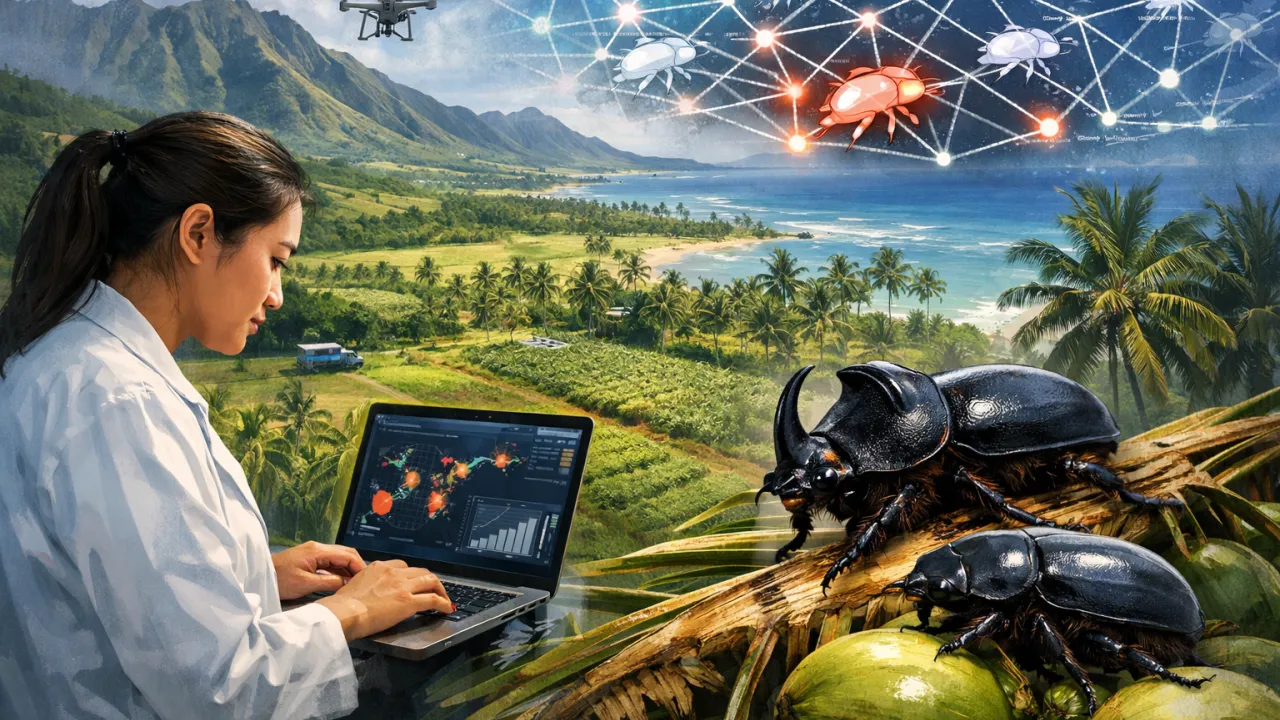
Researchers at the University of Hawaii at Manoa are developing an artificial intelligence tool to predict where invasive coconut rhinoceros beetles are most likely to spread on Kauai, Maui, and Hawaii Island. The $300,000 project uses machine learning to analyze environmental conditions favorable to beetle survival and generates predictive maps. These maps will assist field crews in strategically placing traps and prioritizing areas for early detection and containment, providing an advantage to farmers and agricultural responders. Assistant Professor Pascal Aigbedion-Atlor leads the initiative, emphasizing its role in protecting valuable crops and landscapes. Funded by the Foundation for Food & Agriculture Research with matching support from the University of Hawaii, the project includes ongoing validation against field observations to improve accuracy. Officials indicated the technology could be adapted to monitor other invasive species threatening Hawaii’s agriculture. The university is collaborating with state and federal agencies, private organizations, and residents to limit beetle spread.